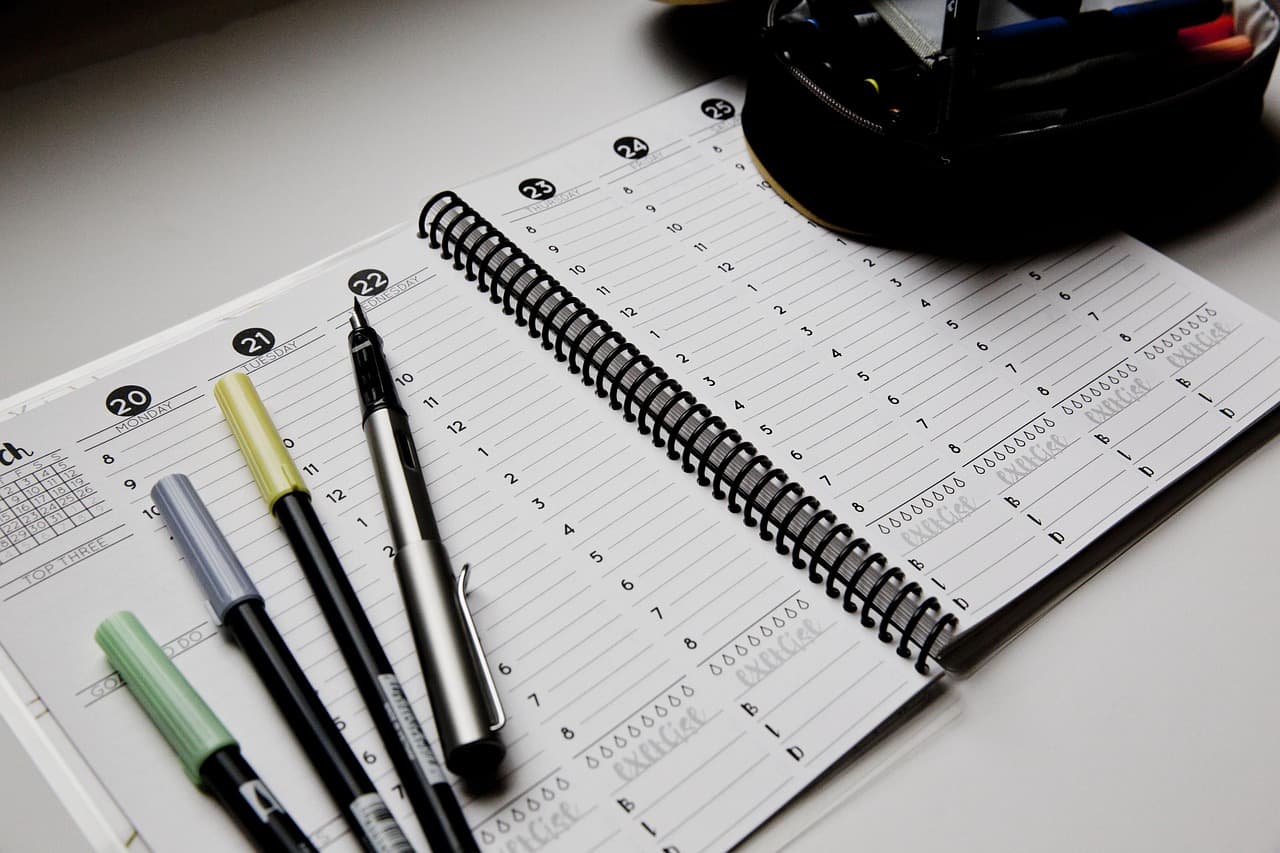
Image by rayedigitaldesigns on Pixabay
Energy Mapping: Build Your Week Around When You Actually Focus Best
You've tried time-blocking. You've downloaded the fancy calendar apps. Yet you're still grinding through deep work during your worst hours, wondering why 3pm always feels like hitting a wall. The problem isn't your discipline. It's that you're scheduling your life against your biology, not with it.
Energy mapping flips that script. Instead of forcing yourself into arbitrary 9-to-5 slots, you identify your actual peak focus windows and design your week around them. This post shows you how to find them, protect them, and build a schedule that works with your natural rhythms instead of against them.
What Energy Mapping Is (And Why It Works Better Than Generic Time Blocks)
Energy mapping is the practice of tracking when your mind is sharpest, then aligning your highest-leverage work with those windows. It's not about being a morning person or a night owl. It's about discovering your personal peak performance times and treating them as non-negotiable assets.
Your focus capacity isn't constant across 24 hours. Your circadian rhythm, the internal biological clock regulating sleep, hormone release, and cognitive performance, creates predictable peaks and valleys. Research from the National Institute of General Medical Sciences at NIH shows that core body temperature, cortisol levels, and attention span follow cyclical patterns tied to light exposure and individual chronotype. This isn't willpower. This is biology.
Most remote professionals ignore this data entirely. They treat all work hours as equal and wonder why deep focus feels impossible at 2pm. Then they blame themselves for poor discipline. Energy mapping replaces guilt with strategy.
How to Identify Your Personal Peak Focus Windows
Start by tracking, not by guessing. For two weeks, log your energy level and focus quality every two hours. Use a simple scale: 1-10 for mental clarity, 1-10 for sustained attention, and what you were doing beforehand (sleep, coffee, a meeting, exercise).
You're looking for patterns. Most people have two to three predictable windows per day where deep work feels natural. For some, that's 6am-9am and again at 7pm-10pm. For others, it's 11am-1pm and 9pm-midnight. Remote work is your advantage here. You can actually build your schedule around these windows instead of fighting them.
Pay attention to transitions, not just raw time slots. What happens before your peak? Did you sleep well? Eat? Exercise? Skip the news scroll? Document the conditions. You're building a personal manual of your own optimal performance.
Once you have two weeks of data, find the overlapping high-focus windows. If you're consistently sharp from 10am-1pm and again from 8pm-11pm, those are your focus hours. Block them. Treat them like client meetings. They're non-negotiable.
How to Build Your Week Around These Windows
This is where most people fumble. They identify their peak hours and then immediately backslide into reactive scheduling.
Protect your focus windows first. Open your calendar. Mark these slots as "Focus Time" or "Deep Work." If you use Outlook or Google Calendar, make them private events so colleagues don't book over them. If you're using Flowspace Focus, the Focus Flow session timer lets you log consistent session lengths and track which time windows yield your best focus patterns through automatic session history. You'll see data on your best focus time and most successful session length, which reinforces your map and reveals opportunities to extend your peak windows.
Next, assign your work intentionally. High-leverage projects that require deep focus (strategy, writing, design, complex problem-solving) go into your peak windows. Reactive work (emails, Slack, admin) gets the valley slots. If you're sharp from 10am-1pm, that's when you tackle the work that moves the needle. Your 2pm-4pm slump becomes email and meeting time.
Create a weekly template. Sunday evening, map out which deep work projects own which focus windows. This removes the decision fatigue of waking up and asking "what should I focus on?" You already know.
Build in consistency. If your peak is 10am-1pm, start at 10am every day. Your brain adapts to the routine. After a few weeks, you'll notice that by 9:55am, you're already mentally primed. The ritual becomes a trigger.
The Role of Your Second Peak (And How to Not Waste It)
Many remote professionals have a second focus window later in the day or evening. Some are 7pm-10pm. Others are 11pm-2am. Remote work lets you use this legally and productively if you structure your day right.
If your second peak is 7pm-10pm, that's real working time. Not email. Not busywork. Use it for complex projects that your morning window couldn't finish, or for a different type of deep work that requires a different mental mode. Then stop at 10pm. Protect your sleep.
If your peak is 11pm-2am, you're likely an extreme night person. This is harder to defend in traditional work cultures, but as a remote professional, you have leverage. Propose core hours that cover meetings and collaborative work (say, 11am-3pm), then protect your 11pm-2am window for independent output. Most managers care about outcomes, not when you produce them.
Document this in your energy map. Write it down, share it with your manager if relevant, and treat it as part of your professional rhythm, not an anomaly.
Review Your Goals With Owliva
Once you've mapped your energy and blocked your week, align your goals to these windows. This is where Owliva AI coaching adds concrete value. Owliva can check in with you before your focus session starts, at the halfway point, and after completion, helping you track whether you're actually using your peak hours for your highest-priority work. Over time, you'll see whether your energy map is real or whether you need to adjust your blocks based on actual session performance and session history data.
Next Steps
Tomorrow evening, spend 15 minutes writing down the times when you felt most mentally sharp this week. Don't overthink it. Just list rough windows. Then pick one window to protect starting Monday. Set a calendar block. Commit to one week of using that window exclusively for your most complex work. Track how much you accomplish. Compare that output to the same amount of time spent in your typical low-energy window. The gap is your evidence. Use it to justify protecting more windows.
Further Reading
-
Circadian Rhythm Regulation and Sleep-Wake Behavior - NIH research on how biological timing systems influence cognitive performance and focus capacity across the day.
-
The Chronotype and Sleep Architecture: Implications for Sleep Quality in Shift Workers - Peer-reviewed findings on how individual chronotypes interact with work schedules and mental performance.
-
Deep Work: Rules for Focused Success in a Distracted World - Cal Newport's framework on scheduling deep work during peak cognitive windows and protecting focus time from interruption.
Ready to put this into practice?
Review your goals with Owliva →